
Academics-Nursing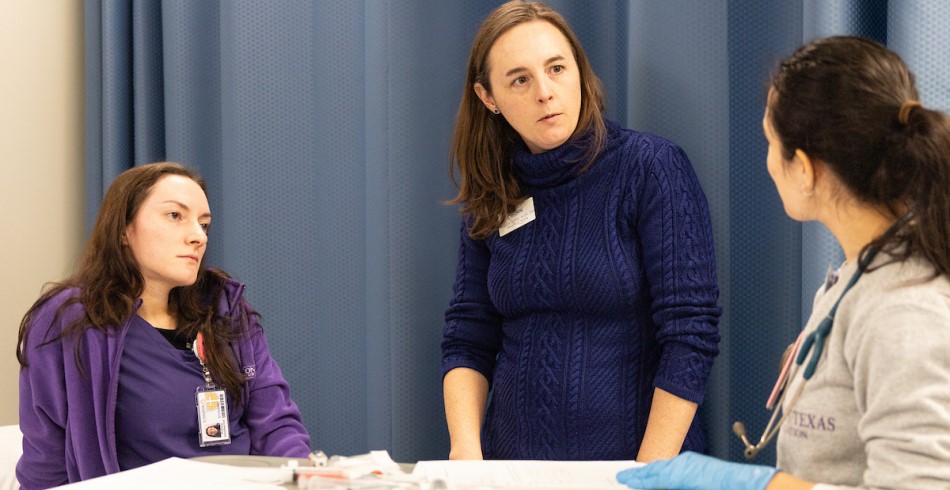
Nursing Simulation Debriefing: What Happens After a Simulation Ends?
November 27, 2026
Nursing simulation debriefing gives students time to reflect on clinical decisions, talk through their emotions, and learn from a patient care scenario. At Concordia University Texas, that conversation is part of preparing students to care for patients and families, including at the end of life.
In one simulated scenario, a patient continues to deteriorate despite every intervention the Bachelor of Science in Nursing (BSN) students attempt. One student calls for help, and additional students join the team. They communicate changes in the patient’s condition and work together to support the patient and family.
Despite their efforts, the simulated patient dies. The outcome is an intended part of the exercise, designed to help students experience and process an end-of-life situation.
For Concordia Texas nursing students, the learning continues in the discussion that follows.
Understanding Nursing Simulation Debriefing
Debriefing is a guided conversation after a nursing simulation. Students review what happened, explain the reasoning behind their actions, and consider what they would do differently in a future clinical situation.
Simulation gives students opportunities to practice hands-on skills, communication, and teamwork in a structured setting with support from peers and an instructor. Debriefing helps them connect those experiences to evidence-based nursing practice and examine how their decisions shape patient care.
It also creates space to discuss emotions. After an end-of-life scenario, students may need time to process the experience before they can fully examine their clinical decisions.
Recognizing What Went Well
As the instructor, my first question is always, “What went well?”
In a typical scenario, students may initially respond, “The patient did not die.” In this exercise, however, the patient’s death was planned regardless of the interventions students attempted. The purpose was to practice caring for a patient and family at the end of life.
So, I ask again: “What went well?”
With time to reflect, students begin to recognize how they worked together, supported one another, and communicated changes in the patient’s condition. They discuss how they explained the situation to the family and offered comfort during a difficult experience.
Some students connect these moments to their Christian nursing education. They reflect on how their faith-informed education helped them offer empathy, dignity, and emotional support.
I also share what I observed. Students may overlook the things they did well when they are focused on a patient’s deterioration. I point out that they introduced themselves, verified the patient’s name and date of birth, assessed allergies, and remained present with the family. These actions are essential parts of safe, respectful nursing care.
Building Clinical Judgment Through Reflection
After discussing what went well, we examine how students made decisions throughout the scenario. I ask them to explain their reasoning and consider whether they would make the same choices again.
We discuss when the first student recognized the need for help and whether assistance was requested at an appropriate time. We consider how an earlier or later call might have affected the team’s response, how students communicated as the patient’s condition worsened, and what additional resources they could have considered.
These conversations help students understand the thinking behind each action. They can identify areas for improvement and connect classroom knowledge to patient care. They also have an opportunity to practice explaining their clinical reasoning to others.
Build your nursing skills with opportunities to practice, reflect, and learn alongside
supportive faculty at Concordia University Texas.
Start your application and take the next step toward a career caring for others.
Apply TodayPreparing for End-of-Life Care in Nursing
Students often say they do not know how they will feel in an end-of-life situation until they experience it. Death and dying can bring forward personal beliefs, memories, fears, and emotions.
Following this simulation, I give students time to examine their attitudes and beliefs about death and dying. Through self-assessment, they consider how their personal perspectives may influence their nursing practice.
Understanding our own responses can help us remain present when patients and families are experiencing grief, uncertainty, and loss. That self-awareness is part of learning to provide compassionate care.
Making Space for Self-Care
Because this scenario is emotionally demanding, we conclude the debriefing by discussing self-care. Nurses care for patients and families during some of the most difficult moments of their lives. Learning how to care for themselves matters, too.
For this simulation, I provided a box of full-size candy bars and invited students to choose something they enjoyed. It helped lighten the mood and opened a conversation about the small, personal ways they recharge.
Some students enjoy going to the gym. Others prefer a walk along the river, time with family, or a favorite restaurant. One student simply said, “I just want a burger.”
What helps one person recharge may not work for another. The conversation encourages students to recognize their needs and make room for self-care as they prepare for a nursing career.
Learning to Care for Patients and Families
Nursing simulation debriefing helps students look beyond a scenario’s outcome. They learn to recognize effective care, examine their decisions, and consider how they can improve.
At Concordia Texas, this experience gives future nurses opportunities to practice clinical judgment with support from an instructor and their peers. It also helps them understand the care patients and families need when a life is ending: comfort, dignity, clear communication, and someone willing to remain present.
Explore the BSN nursing program at Concordia Texas to learn more about preparing for a career caring for others.
About The Author
Dr. Stephanie Blundell joined Concordia University Texas as adjunct nursing faculty in August 2026. She brings more than 25 years of nursing experience and 15 years in higher education. Her expertise includes simulation, curriculum development, and clinical education, with a commitment to mentoring students and faculty.