

Accessible Support that Empowers You
At Concordia University Texas, we’re committed to helping you thrive academically and fully engage in campus life. The Office of Accessibility Services (OAS) is here to support your accommodation needs and guide you through the process.
If you have questions after reviewing the information below, email us at accessibilityservices@concordia.edu .
How to Request Accommodations
Welcome Students! Our Guide to Requesting Accommodations provides a clear, step-by-step overview of the process. Once you're ready, fill out the Request for Accommodations form to get started.
Parents, Guests, and Visitors: If you are coming to visit CTX, we’d love to talk through your access needs, too! Please reach out to the Office of Accessibility Services directly to discuss your needs. Email us: accessibilityservices@concordia.edu Call us: 512-313-4302
Each semester, on average*, the OAS:

* Data averaged over four academic semesters: Fall 2024, Spring 2025, Fall 2025, and
Spring 2026
Start the Accommodation Process
Begin with our Guide to Requesting Accommodations, which outlines each step clearly. Once you're ready, complete the Request for Accommodations form.
In your request, describe the barriers you experience due to your disability or health condition. Supporting documentation is encouraged and often required to help us understand how your condition affects your education or daily life. Please note: Accommodations previously granted elsewhere or recommended by outside providers are not guaranteed by CTX.
Examples of helpful documentation:
- High school 504 Plan or IEP
- Medical provider’s statement on letterhead
- Diagnostic assessments
- Medical records
Once we receive your full request, the Office of Accessibility Services (OAS) will review it and determine appropriate accommodations for our CTX community. You will then have a meeting with a team member to ask questions, discuss your individual needs, and agree on the accommodations.
Report a Disability Barrier
At CTX, our goal is to foster an inclusive and accessible environment. We welcome your feedback on any inaccessible areas or learning materials. Use the Early Alert form to report disability barriers around campus, in class, or within digital environments. When submitting a report, remember to select ‘Disability Barrier' as the 'Nature of the Report'.
Submit a Disability Barrier Report
Connecting with the Office of Accessibility Services
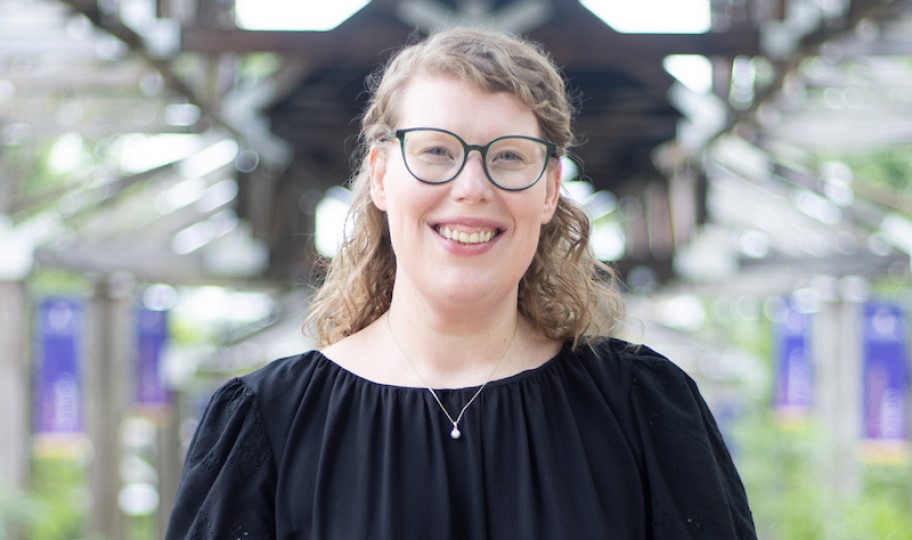
Sharon Whightsil: Accessibility Coordinator
Supporting inclusive and accessible experiences for everyone by coordinating accommodations, managing the Testing Center, and collaborating across programs and services.
FAQs
-
How do I receive accommodations at CTX?
Students must self-identify as having a disability and complete the Accommodation Request Form to begin the process. Then the OAS will schedule an Onboarding Meeting after reviewing your form and any requested documentation.
For more information, read through our Guide to Requesting Accommodations or contact us.
-
What accommodations and services are available at CTX?
During your Onboarding Meeting, the OAS will work to understand your unique needs and personalize your accommodations. Common options include:
- Notetaking support
- Text-to-speech tools
- Digital textbooks
- Testing accommodations
More info:
-
Can I bring my service animal with me to CTX?
Yes, dogs that are individually trained to do work or perform tasks for people with disabilities are allowed to accompany a person with a disability everywhere on campus and University Housing. No documentation is required, but we ask students to share their intent to bring a trained service on campus.
-
Are emotional support animals allowed at CTX?
Students can request an accommodation for an emotional support animal (ESA) in University Housing. Documentation from a medical or mental health provider and animal health records are required during the ESA request process. Once approved by the Office of Accessibility Services, students will meet with the Office of Residential Life to review how to care for the animal in University Housing.
-
How is college different from high school?
In college, students are responsible for managing their accommodations. This includes self-identifying, submitting documentation, and advocating for their needs with professors and OAS.
Helpful resources:
-
What assistive technology resources are available?
Course materials are delivered through Blackboard Ultra, which includes built-in accessibility features. Tools like Read Speaker are also available for digital textbooks and exams. The OAS can help train you on these resources or connect you with different resources as needed.
-
How do I get around campus?
Navigating campus can be difficult for students regardless of their disability status. For students with mobility concerns, accessible pathways are available across campus. Every building on campus has elevators and push buttons for entry. To map your route around campus, use the ADA Approved Map (PDF)