Career-Advice, Academics-Law
What Can You Do with a Criminal Justice Degree?
March 31, 2026
National Criminal Justice Month is a meaningful time to reflect on the role criminal justice professionals play in our communities. It is also an opportunity to think about how we prepare the next generation of leaders for careers in law enforcement, legal studies, social services, and public advocacy.
As I work with students in Concordia University Texas’s Criminal Justice & Criminology program, I am often reminded that this field is about far more than crime alone. It is about people, systems, responsibility, and the pursuit of justice in a complicated world. That is what makes this area of study both challenging and deeply rewarding. Concordia Texas’s Bachelor of Arts in Criminal Justice & Criminology is built to help students examine the nature of justice, understand how it shapes society, and prepare for meaningful work that serves others.
More Than a Criminal Justice Degree
One of the things I value most about this program is its breadth. Because the program is offered both online and on campus, students can also tailor their education to fit their schedules and future.
But flexibility is only part of the story. Our program encourages students to think critically about justice itself. We explore crime, courts, corrections, social systems, and the broader questions of fairness, accountability, and restoration. For students who plan to enter law enforcement, attend law school, or pursue graduate study, that foundation matters.
Learning Criminal Justice in Austin
Our location in Austin gives students a distinct advantage. With access to state agencies and organizations involved in crime and justice, students can observe legislative processes, observe trial and appellate courts, and participate in internships with social justice agencies. Those experiences allow students to connect classroom learning with the realities of the field.
In my view, this kind of hands-on exposure is essential. Criminal justice is not a discipline students should study only in theory. They need opportunities to see how institutions function, how decisions are made, and how justice affects real people in real communities. That is one of the reasons Concordia Texas’s Criminal Justice & Criminology program is so valuable.
Innovative Learning in the Esports Lab
One of the more distinctive ways our students learn is by using Grand Theft Auto in our Esports lab. At first, that may sound unexpected in a criminal justice classroom, but it creates a unique opportunity for students to analyze crime, public space, human behavior, criminology theory, decision-making, and justice systems in a simulated environment.
Using a virtual world gives students the chance to observe scenarios, discuss ethical questions, and think critically about how crime is represented in popular culture. It also opens the door to conversations about law enforcement responses, social disorder, community dynamics, and the difference between entertainment and reality. In many ways, it helps students sharpen the analytical thinking essential to criminal justice.
For today’s students, innovative teaching matters. When we connect course con cepts to interactive experiences, students engage with the material in deeper, more memorable ways. The esports lab is one example of how we are preparing students to think creatively and critically about the world they are called to serve.
Building the Next Generation of Justice Leaders
A criminal justice degree can lead students into careers as police officers, detectives, probation officers, correctional officers, victims’ advocates, social workers, prosecutors, defense attorneys, and federal agents. At Concordia Texas, we aim to prepare students not only for careers but for service.
If you are looking for a criminal justice program in Texas that combines flexibility, mentorship, practical preparation, and a strong ethical foundation, Concordia University Texas offers a path worth considering.
About the Author
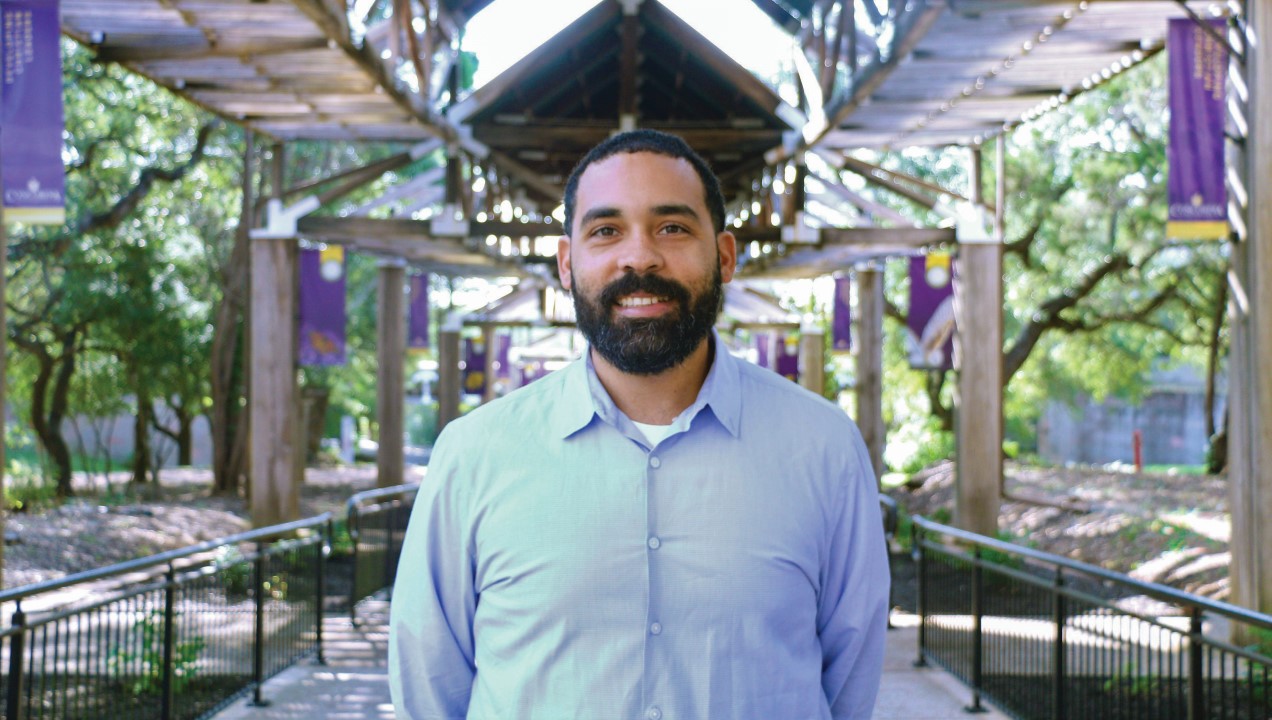
Dr. Bruce Reese is associate professor and director of Criminal Justice/Criminology at Concordia University Texas, co-chair of Sociology, head of the Institutional Review Board, and assistant coach for women’s basketball. He holds degrees from Texas A&M, Boston University, and Tufts. His research explores identity, deviance, stratification, inequality, cooperation, prosocial behavior, status, and white-collar crime.